The sea at the bar: sushi and omakase in Cartagena
From the fishermen of La Boquilla to the SLVJ bar: a port, one limited-seat omakase a month and a hosomaki bar on its way.
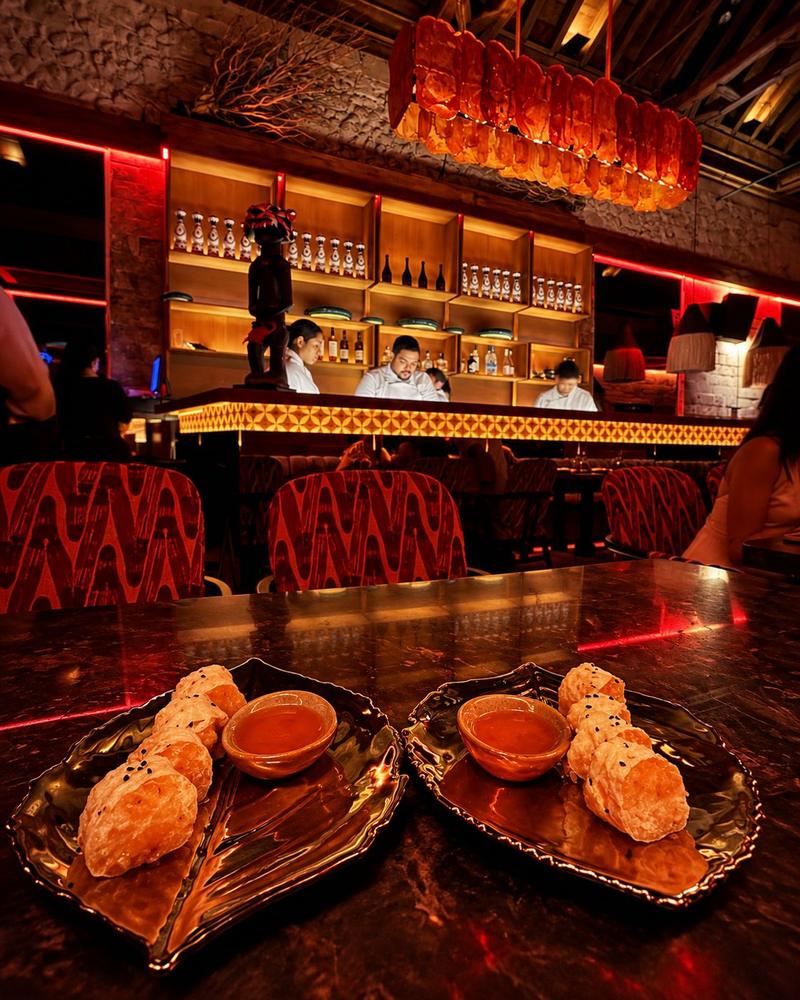
The bar is silent except for the knife. A clean cut, the sheen of fish under amber light, warm rice shaped in two movements. Outside, a few blocks away, the Caribbean keeps beating against the city walls as it always has. In a city by the sea, raw fish makes sense. At Casa Salvaje sushi has two homes: the SLVJ bar, already open, and ONO, arriving soon.
A port that always looked to the sea
Cartagena lived from the sea before it was even called Cartagena. North of the city, in La Boquilla, an Afro-Colombian community of small-scale fishermen still heads out by canoe through the mangroves, and the city has declared its Fishermen's Festival an event of cultural interest. At Bazurto market, the fish arrives early and is sold at the top of the sellers' voices, between mountains of plantain and yam.
Japan, on the other hand, reached Colombia through the Pacific. On 16 November 1929, the first Japanese settler families, from Fukuoka, came ashore at Buenaventura from the ship Rakuyo Maru. They settled at El Jagual, in Corinto (Cauca), to farm the land, and their descendants live today mostly in Cali and Palmira. Almost a century later, vinegared rice and raw fish speak with a Colombian accent.
I · The bar
Where the night begins
The SLVJ sushi bar
At SLVJ the night begins at the bar. It's the place to order a few pieces while the rest of the table arrives, or to stay all dinner watching the cooks work. SLVJ is open Monday to Saturday 12–3 pm and 7 pm–12 am, and Sundays 11 am–7 pm (until 12 am when Monday is a public holiday). See the menu.
Best for a few pieces while the rest of the table arrives.
Almost a century later, vinegared rice and raw fish speak with a Colombian accent.
II · The last Tuesday
Omakase: I leave it to you
Rolled sushi has humble roots. In Edo, the old name for Tokyo, it became food for ordinary people: by the mid-Edo period, rolling rice and filling in a sheet of nori was a widespread habit. Omakase keeps the essence of that tradition: trust in the hands of whoever is cutting the fish.
Omakase roughly means "I leave it to you". Once a month, on the last Tuesday, the SLVJ bar becomes a limited-seat omakase: you sit down and the bar decides. The date goes out first to the guest list, and seats go fast.
III · What's next
ONO is coming to Cartagena
ONO, the hosomaki bar born in Bogotá, opens in the house between November and December 2026. Shoji screens, timber beams, red light and a samurai at the door. Tuna, eel, salmon, hamachi and wagyu beneath the skin, and the Oni mask after dark. On the ONO page you can see the anatomy of every roll, layer by layer.
Epilogue
Before you head home
On Plaza de Bolívar, the Museo del Oro Zenú, opened by the Banco de la República in 1982, holds the goldwork of the Zenú, the people who lived on the Caribbean plains and wetlands long before the Spanish arrived, in constant dialogue with water and land. Seeing those tiny pieces, made with endless patience, you understand that in this region craft has always been a kind of magic.
- SLVJ Meet SLVJ · Menu · See on the map
- ONO Meet ONO · Guest list
Calle Santa Teresa #32-41, Old City, two blocks from Plaza Santo Domingo. Full opening times in the hours section.