
No more hooves on the stones: Cartagena's electric carriages in the Old City
From the clock tower to the Plaza de los Coches, how the city retired its horses without losing its most classic ride, and how to take it today.
Late in the afternoon, when the heat eases and the stones still hold the day's sun, the Old City changes its sound. For decades that sound was hooves on cobblestones: horse-drawn carriages were part of Cartagena's postcard. They were also the subject of a long debate about animal welfare, with horses working hours in the Caribbean heat on stone streets. That chapter is closed: today rides through the Old City run in electric carriages, and all you hear as one passes is a murmur.
A city best seen at a slow pace
Almost every carriage ride begins or ends at the Torre del Reloj, the clock tower that serves as the main gate to the walled city. Locals also call it the Boca del Puente, the mouth of the bridge, because in colonial times a drawbridge linked it to Getsemaní, the artisans' quarter across the channel. The clock that gives it its name arrived from the United States in 1874, and it has kept time ever since for a city that has never been in a hurry.
At the foot of the tower lies the Plaza de los Coches. It had other names before, and one belongs to the bitterest chapter of Cartagena's history: this triangular square was the market where enslaved Africans brought into the port were sold. Tradition has it that the current name dates from the late 19th century, when hired carriages were allowed to park here, in front of the Portal de los Dulces. Coachmen have been waiting for passengers on the same corner ever since.
I · The campaign
A comedian and thousands of donors
The push came from civil society. Colombian comedian Alejandro Riaño led a crowdfunding drive, backed by thousands of donors, to pay for a first electric carriage prototype styled like the traditional ones. In January 2024 he handed it to the city of Cartagena, which began trials with the coachmen in the Old City.
II · The system
From prototype to the streets
From there the city built a sustainable tourist transport system to replace animal traction. Horse carriages were banned at the end of 2025, a free pilot drew a strong response, and the mayor's office then handed the keys of 60 electric carriages to the families who had made a living from the horse carriages. Commercial operation is run by the Coachmen's Association: the same coachmen who know every corner of the city now drive the electric carriages.
III · The ride
The city seen from above
Moving through the Old City at that rhythm is another way of reading it. From a carriage you see the wooden balconies better, the animal-shaped door knockers on the great doors, and the palenqueras balancing bowls of fruit on their heads, women who often come from San Basilio de Palenque, the town founded by escaped slaves near Cartagena that UNESCO proclaimed a Masterpiece of the Oral and Intangible Heritage of Humanity in 2005.
Moving through the Old City at that rhythm is another way of reading it.
How to take a ride
- Hours: according to the city, rides run from 9 am to 11 pm.
- Where to board: authorised points include Baluarte de Santo Domingo, La Serrezuela, Parque Bolívar, Plaza de San Pedro Claver and Plaza de los Coches.
- Rides: there are short and long routes, and prices change between low and high season. Agree the fare with the driver before you set off; reference prices are on the city's official page.
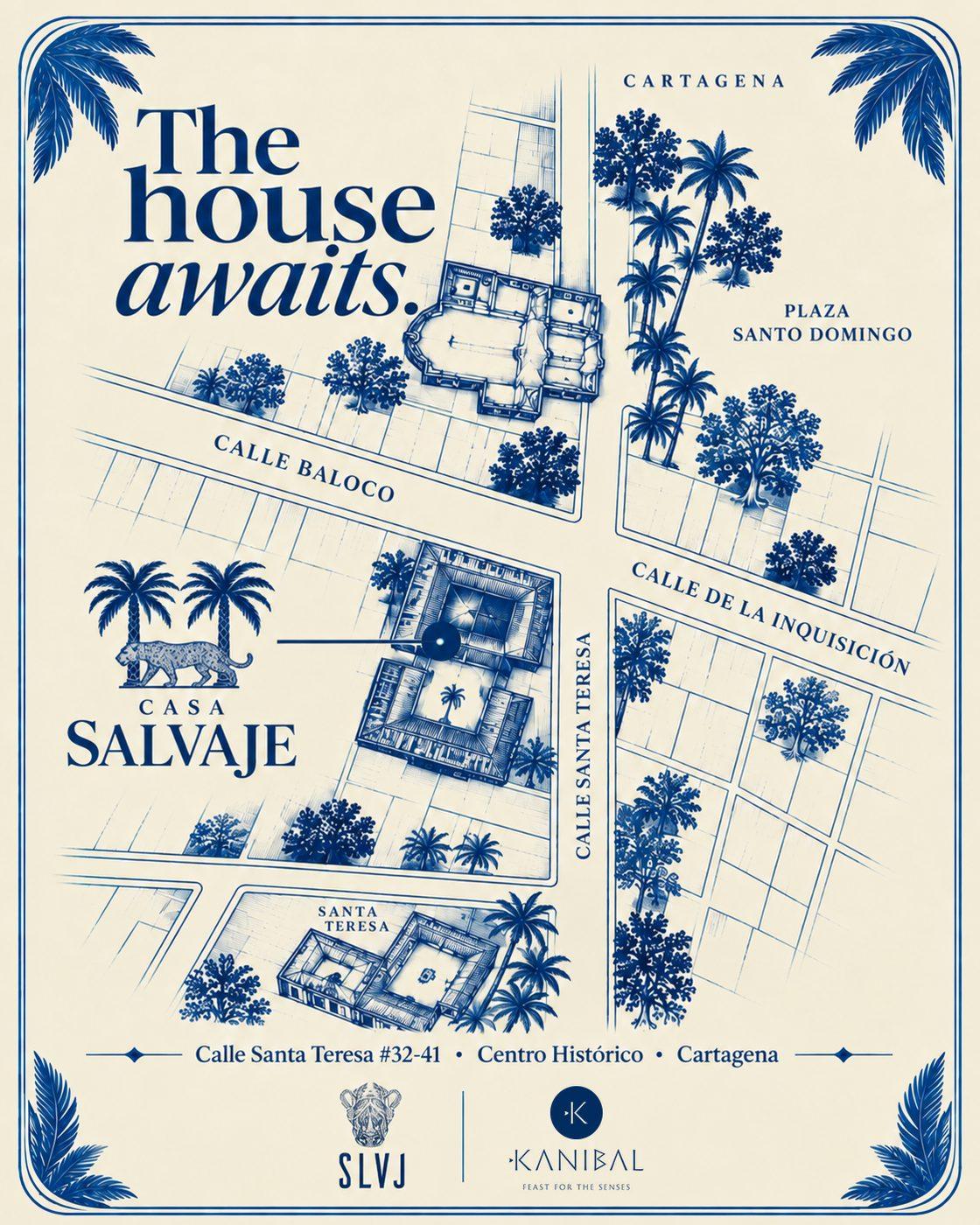
A sunset ride past the walls and plazas, then dinner at Casa Salvaje: we're at Calle Santa Teresa #32-41, two blocks from Plaza Santo Domingo and close to the Baluarte. Check opening hours and book your table.
Epilogue
A city that changes
The switch wasn't simple: it took agreements with the coachmen, traffic permits and months of trials. But the result is a city that keeps a tradition without the cost to the animals. If an Old City ride is on your list, now is the time.
Cartagena has always known how to change without ceasing to be itself. Gabriel García Márquez, who began as a journalist at El Universal in 1948, carried these streets into fiction, and the poet Luis Carlos López, known as El Tuerto López, wrote a sonnet, A mi ciudad nativa, likening his affection for Cartagena to the fondness one feels for a pair of old shoes. The city answered with a monument, the Botas Viejas (Old Boots), which now stands behind the Castillo de San Felipe. The electric carriages are, in their way, the same idea: keep what you love, and leave behind what no longer makes sense.
- Baluarte de Santo Domingo See on the map
- La Serrezuela See on the map
- Parque Bolívar See on the map
- Plaza de San Pedro Claver See on the map
- Plaza de los Coches See on the map
- City of Cartagena · electric carriages Website
Authorised boarding points, all within walking distance of Casa Salvaje, Calle Santa Teresa #32-41.
Sources: Alcaldía de Cartagena, El Tiempo, El Colombiano.