The Heroic City at the table: must-try restaurants in Cartagena
Chef-driven Caribbean cooking, legendary ceviche and walled-city classics with live music, in a city that earned its name siege by siege.
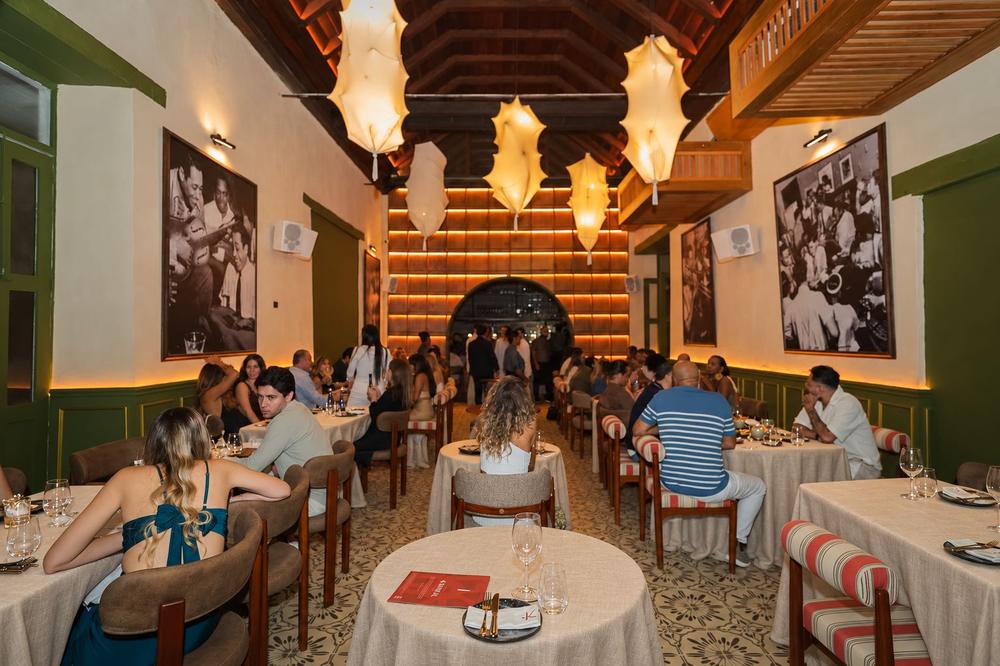
Some cities are explored on foot and others with the palate. Cartagena is one of the latter: fish arriving early at the market, lime squeezed over ceviche, Cuban son drifting from an open window at midnight. In just a few years it has become one of the most exciting places to eat in Colombia. This is our list for anyone coming here to eat well: a few classics, a few with international acclaim and, of course, our house.
A city that earned its name
Cartagena is known as "La Heroica", the Heroic City, and it earned the nickname siege by siege. Francis Drake sacked it in 1586, and the Crown answered with walls and forts. In 1741, Admiral Edward Vernon's British fleet besieged it for two months; Blas de Lezo, with just six ships, scuttled his own vessels in the mouths of the bay to block the way, and the city held. In 1815, during the war of independence, it endured months of siege and hunger against Pablo Morillo's troops, and the title stuck.
That besieged city, the port of entry for almost everything bound for New Granada, learned to cook with whatever the sea brought and whatever came down from the interior. UNESCO declared it a World Heritage Site in 1984, and today its best tables do what its kitchens always did: mix without asking permission.
Its best tables do what its kitchens always did: mix without asking permission.
I · Getsemaní
The lancers' quarter
Getsemaní was the artisans' quarter outside the walls, and it is where the city's independence began. On 11 November 1811, the lancers of Getsemaní, led by Pedro Romero, marched out of the neighbourhood to pressure the governing junta, and that same day Cartagena declared its independence from Spain. Plaza de la Trinidad, in front of the yellow seventeenth-century church, still fills with neighbours and food stalls at sundown.
Celele
Celele cooks the Colombian Caribbean with local ingredients, many of them wild-harvested, and a menu that changes constantly. It's one of the country's most celebrated restaurants on the Latin America's 50 Best list.
Best for discovering the Colombian Caribbean one plate at a time. Book ahead: it rarely takes walk-ins.
II · The walled city
A table in a colonial house
Carmen
Born in Medellín and in Cartagena since 2012, Carmen works with local ingredients, plenty of seafood and Asian touches in a tasting menu inside a colonial house in the Old City.
Best for a long tasting-menu evening.
III · San Diego and the walls
Sea, lime and son
La Cevichería
On Calle Stuart in San Diego, it's the city's most famous ceviche spot ever since Anthony Bourdain came through. That was in 2008, in an episode of No Reservations. Jorge Escandón, its owner and chef, took Bourdain through Bazurto, the city's great market since 1978, when it replaced the old Getsemaní market: fresh fish, mountains of plantain, cassava and yam, and the real pulse of Cartagena cooking.
Order a ceviche. No reservations: arrive early or expect a short wait.
La Vitrola and Juan del Mar
Two institutions. La Vitrola, in a colonial house facing the city walls, with live Cuban music in the evenings. Juan del Mar, seafood on Plaza de San Diego, one of the liveliest squares in the Old City.
Live music is another legacy of the port. Cumbia, born on Colombia's Caribbean coast, is usually told as the meeting of three worlds: the gaita flutes and caña de millo of Indigenous peoples, the drums of Africa and the costumes of Spain. Hearing it on a Cartagena night is hearing the city's whole history in a single beat.
IV · Our house
Fire and feast on Santa Teresa
Kanibal and SLVJ, at Casa Salvaje
At Calle Santa Teresa #32-41, two blocks from Plaza Santo Domingo. Kanibal is fire: meat over flame, vegetables pulled from the coals. SLVJ is a feast and a sushi bar, and Thursday to Saturday the room becomes a club until 3 am.
Epilogue
Before you head home
Behind the Castillo de San Felipe stands a pair of bronze old boots. They are the city's tribute to Luis Carlos López, "El Tuerto" López, a poet born in Cartagena in 1879 who teased his hometown fondly in verses full of irony. His best-known sonnet, "A mi ciudad nativa", ends by comparing his love for Cartagena to the affection you feel for a pair of old shoes. After a few days here, it makes perfect sense.
- Celele See on the map
- Carmen See on the map
- La Cevichería See on the map
- La Vitrola See on the map
- Juan del Mar See on the map
- Kanibal and SLVJ Kanibal · SLVJ · See on the map
In high season, book everything ahead. For our house, WhatsApp is the fastest way; check opening hours before heading out.