
From the pier to the walls: a cruise day in Cartagena
How to get from the port to the Old City, what to see in a few hours, where to have lunch and when to head back so you never have to run for the ship.
Your ship sails into the bay early, slips past the towers of Bocagrande and docks in Manga. The walled city is fifteen minutes away. You have six to nine hours ashore, which is plenty for the essentials if you get the order right: the city on foot in the morning, a proper sit-down lunch, and back to the ship with time to spare.
Where your ship docks
Cruise ships berth at the Cartagena Cruise Terminal (Terminal de Cruceros de Cartagena) on Manga island, run by the Sociedad Portuaria Regional de Cartagena. It is also a working cargo port, so a shuttle bus inside the terminal takes passengers from the pier to the terminal building. From there, the Old City is about 4 km away: 10 to 15 minutes by taxi. Walking it isn’t worth it: heat, traffic and very little shade.
I · Getting there
From the port to the Clock Tower
Official taxis wait outside the terminal. Cartagena taxis have no meters: fares go by zone, they are charged per car rather than per person, and it pays to confirm the price before you get in. Ask to be dropped at the Clock Tower (Torre del Reloj), the main gate of the walled city; from there, everything is on foot. If you’d rather not walk in the heat, electric carriages leave from Plaza de los Coches, right below the tower (here is how they work).
II · The city
The walled city in three hours
Start at Plaza de los Coches, where enslaved Africans were sold in colonial times, and under the arches of the Portal de los Dulces. Continue to Plaza de San Pedro Claver, home to the sanctuary of the Jesuit who received enslaved Africans at the dock, and on to Plaza de Bolívar: the Palace of the Inquisition, the Cathedral and the Museo del Oro Zenú, which is free to enter (closed on Mondays). Finish at Plaza Santo Domingo, where Botero’s bronze Gertrudis waits to be touched for luck. The house is two blocks away.
With eight or nine hours, add the Castillo de San Felipe de Barajas before you head inside the walls: it opens at 8 am, has tunnels beneath the stone and the best view of the city, and from the fortress it is 8 to 10 minutes by taxi to the Old City. One heads-up: on cruise days the Old City fills up from mid-morning to mid-afternoon. The earlier you step off the ship, the more of the city you have to yourself.
Ideal for a six- to nine-hour port call, with a sit-down lunch and no rushing.
III · The table
Lunch at Casa Salvaje
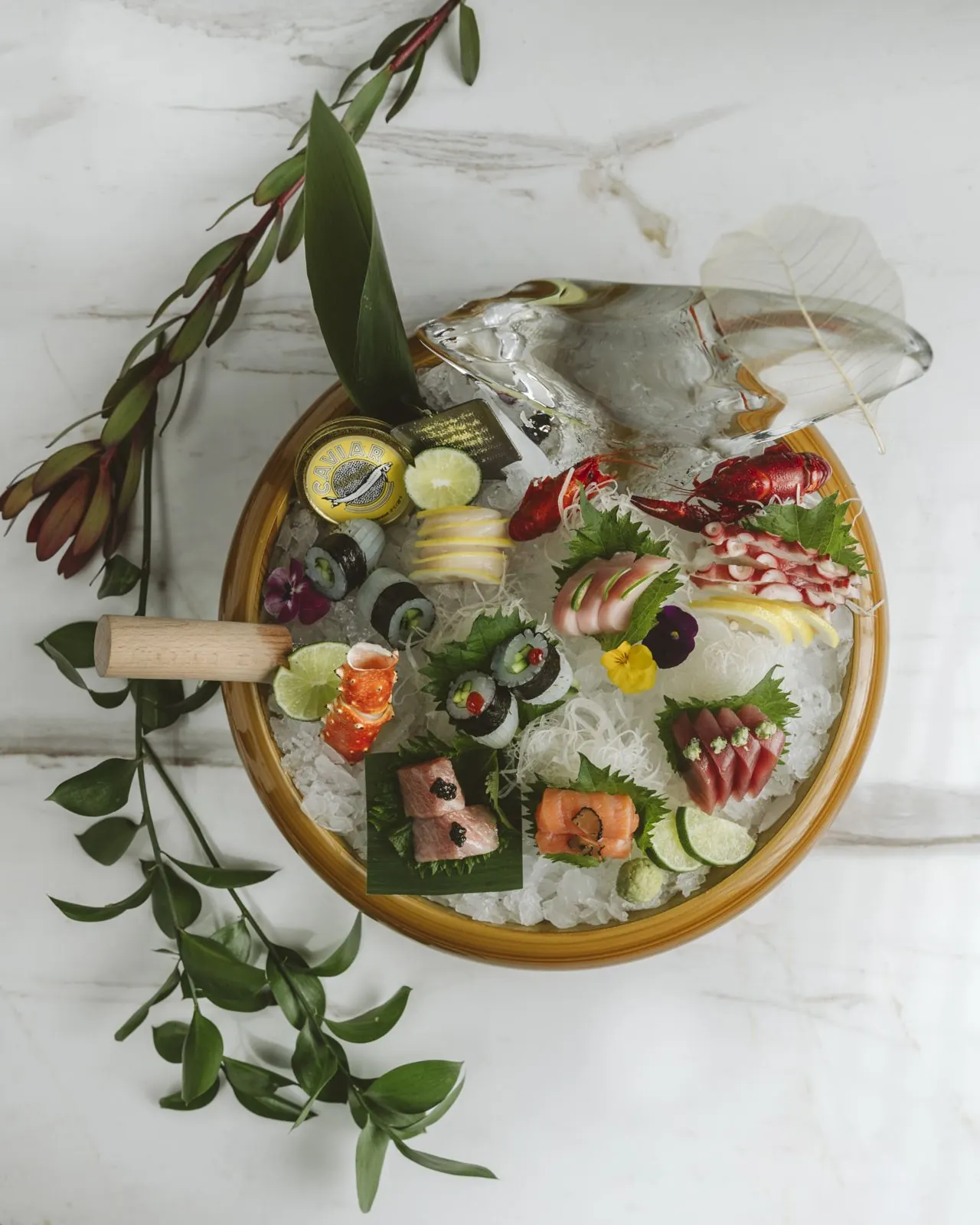
When the sun is at its fiercest, the best shade is a table. We are at Calle Santa Teresa #32-41, on the corner of Calle Baloco (see the map). SLVJ serves lunch Monday to Saturday from 12 to 3 pm, with a sushi bar: nigiri by the piece from COP 26,000 (yellowfin) to COP 96,000 (kama toro), a selection of nine nigiri or nine sashimi for COP 225,000 each, and rolls from COP 43,000. To share, salmon crispy rice (COP 52,000) or lobster dumplings (COP 71,000). Kanibal is open all day from 12 pm: white fish ceviche with smoked rocoto tiger’s milk (COP 50,000) or the Pesca Kanibal, seared over charcoal with ají amarillo and coconut milk (COP 89,000). On Sundays, both are open from 11 am to 7 pm.
Prices are in Colombian pesos, and the online menu always has the final word: SLVJ menu and Kanibal menu. To compare with other tables, see where to eat in the Old City and our must-try restaurants.
On a port day, the real luxury is an unhurried lunch and getting back on time.
IV · Heading back
When to head back to the ship
Cruise lines ask you to be on board by the all aboard time, usually 30 to 60 minutes before departure. Our rule: leave the Old City at least 90 minutes before all aboard. The taxi takes 10 to 15 minutes, longer in traffic, and then there is the line at the terminal entrance and the shuttle back to the ship. You will find taxis by the Clock Tower, and ride-hailing apps (Uber, Cabify, inDrive) work too. Keep “Terminal de Cruceros, Manga” written down to show the driver.
Money: the currency is the Colombian peso (COP). Most places take cards and there are ATMs in the Old City. Change dollars only at banks or exchange offices, never on the street, and carry small peso bills for taxis and water.
Safety: the Old City is easy to walk on streets with people around. Keep jewelry and your phone out of sight, be wary of “guides” who approach you on the street, and agree on any price up front, including a photo with the palenqueras, the fruit sellers in bright dresses. Emergencies: 123.
Heat: 28 to 32 °C (82 to 90 °F) all year. A hat, sunscreen and water; the tap water is safe to drink, though many people prefer bottled.
At the house: book on WhatsApp at +57 310 828 6602. You can pay by card or in cash in pesos, and tipping is optional (10% is suggested). Guests must be 12 or older.
Epilogue
Next time
One day is enough to fall for Cartagena, not to know it. The nights, with the SLVJ club open Thursday to Saturday until 3 am, the fortress at your own pace and a day out on the islands are waiting for your return. We have already drawn up the plan: Cartagena in three days.