
The sound of the knife: ronqueo, the art of breaking down a whole tuna
One fish, one long knife and a three-thousand-year-old craft that travelled from Cádiz to Tokyo and can now be heard in the Caribbean.
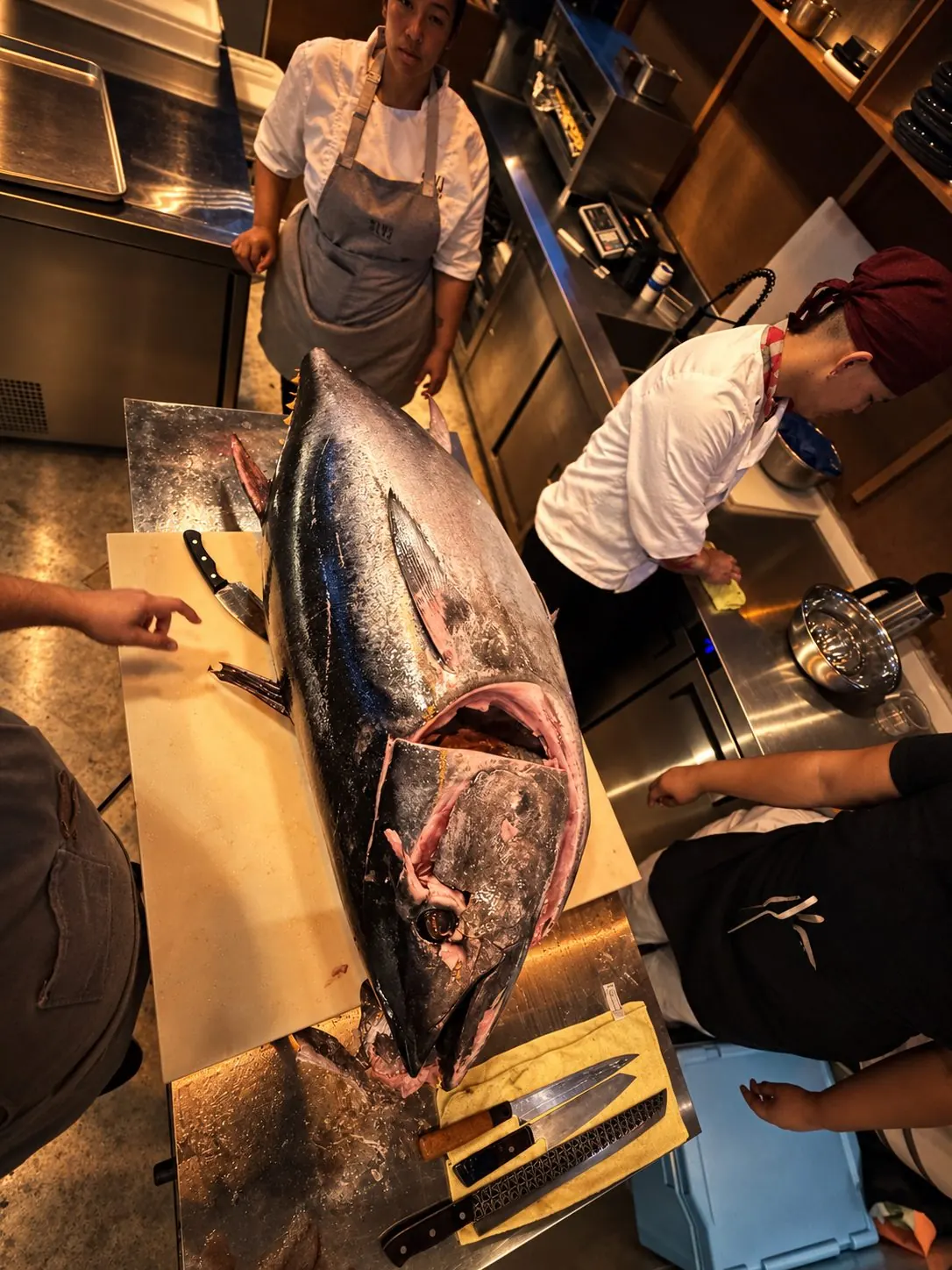
There is a sound you only hear when a whole tuna is opened: a low snore, the knife running tight along the backbone. The word comes from that sound. Ronqueo, from the Spanish for snoring: the art of breaking down a tuna by hand, piece by piece, wasting nothing.
Three thousand years of craft
Ronqueo was born on the coast of Cádiz, in southern Spain, alongside the almadraba: a maze of nets that, since Phoenician times, has waited for bluefin tuna as they pass each spring from the Atlantic into the Mediterranean. In towns such as Barbate, Conil, Zahara de los Atunes and Tarifa, the fish is lifted onto the table and the ronqueadores open it with long knives and a precision handed down through families.
They say of tuna what they say of the pig: everything gets used. That is why ronqueo is not a show, even if it looks like one. It is a form of respect.
I · The map
One fish, many cuts
Opening a tuna is reading a map. The ventresca is the belly, the richest and most sought-after part. The loins are the clean red meat. The morrillo comes from the head; the parpatana, from the jaw; the tarantelo, from between the loin and the tail. Each cut asks for a different knife and a different kitchen: raw, grilled, stewed, cured.
With tuna, as with the pig, everything gets used.
II · The other side of the world
From Cádiz to Tokyo
Japan has its own name for the same rite: kaitai, the breaking down of maguro. There the map is read in three words every sushi counter knows: akami, the lean loin; chutoro, the middle ground; otoro, the belly that melts. Much of the almadraba's tuna does, in fact, end up on Japanese counters. Two shores, one fish and the same idea: the cut is everything.
III · The Caribbean
Ronqueo at the house
At Casa Salvaje, the tuna that arrives whole is yellowfin from Colombia's Pacific coast: leaner than bluefin, with firm flesh and a clean taste. The kitchen breaks it down by hand, and here we call that ronqueo too. From it come the cuts for the sushi bar and for the fire.
Ideal for anyone who wants to know what lies behind a nigiri before ordering it.
Ronqueo depends on the sea: it happens when the fish arrives. When there is a date open to guests, it will be announced first on the guest list.
Epilogue
After the knife
To stay at the counter, read sushi and omakase in Cartagena and what is hosomaki. The rest is sitting down and letting the fish speak.